
OMEGA for Conformation Generation
The most widely used and highly cited conformation generation tool in the world, OMEGA robustly samples conformational space at high speed across a wide range of medicinally relevant chemical space from traditional drug-like molecules to macrocycles.
Proven effective at reproducing bioactive conformations and supporting virtual screening at ultra-large scale, it provides both high speed and excellent accuracy.
Conformations generated with OMEGA serve as input to a variety of applications including 3D similarity tools, docking engines, and machine learning methods.
Trusted for its unmatched combination of speed and accuracy, OMEGA is the gold standard for conformation generation and the tool of choice for computational chemists across industry and academia.
The Gold Standard. Now Faster.
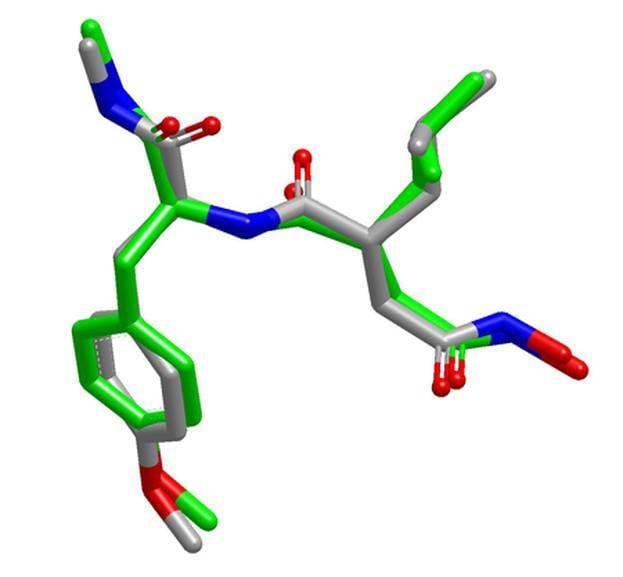
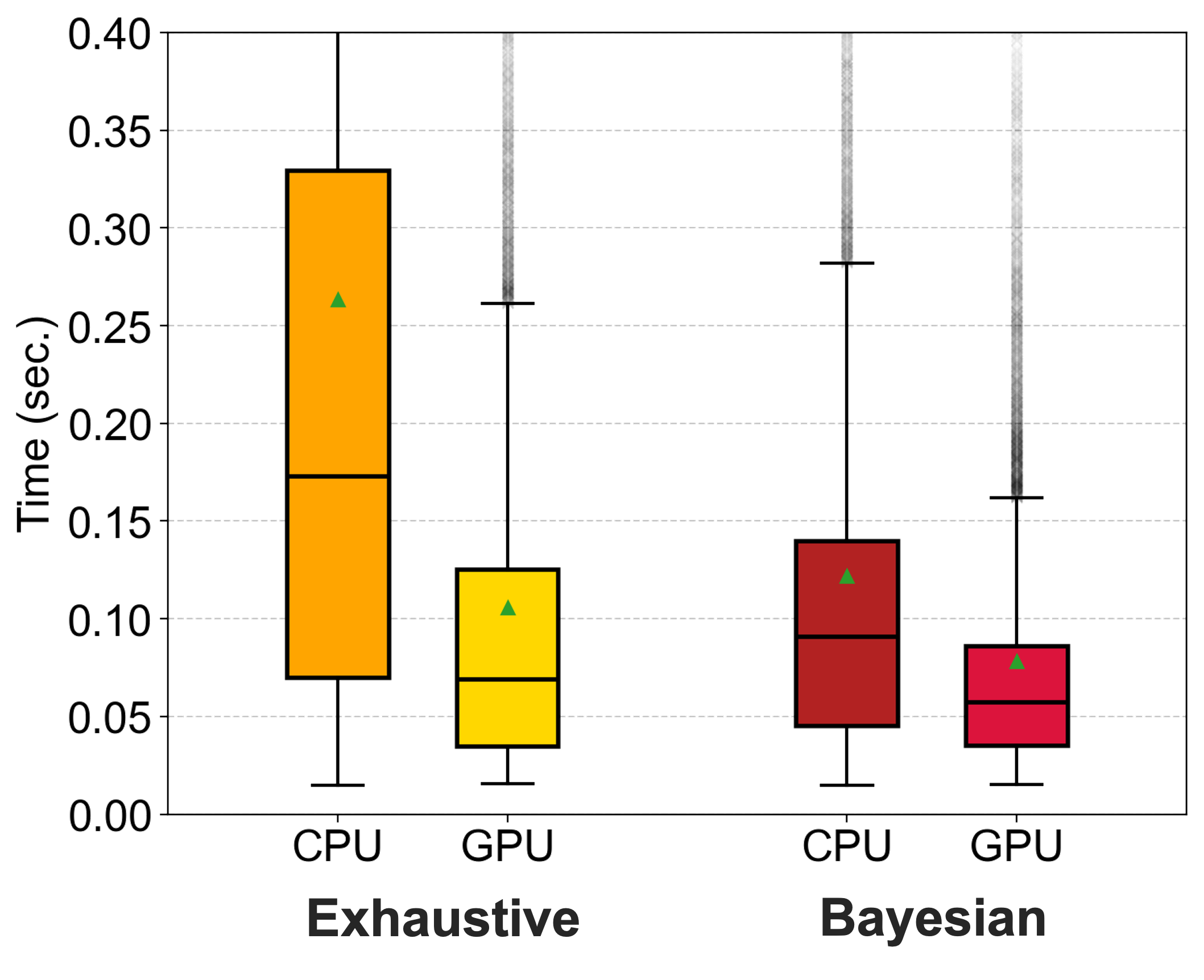
OMEGA's torsion driving algorithm has been enhanced with Bayesian sampling that intelligently focuses conformer generation on low-energy structures. Rather than exhaustively enumerating all torsion angle combinations, the algorithm continuously refines sampling probabilities based on conformational energy landscape explored up to that point, delivering a 2–3x speedup over exhaustive enumeration.
Combined with OMEGA's GPU implementation, Bayesian sampling provides an additional 1.5x acceleration, making high-quality conformer generation faster and more scalable than ever for large compound libraries.
OMEGA with AI. Speed without Compromise.
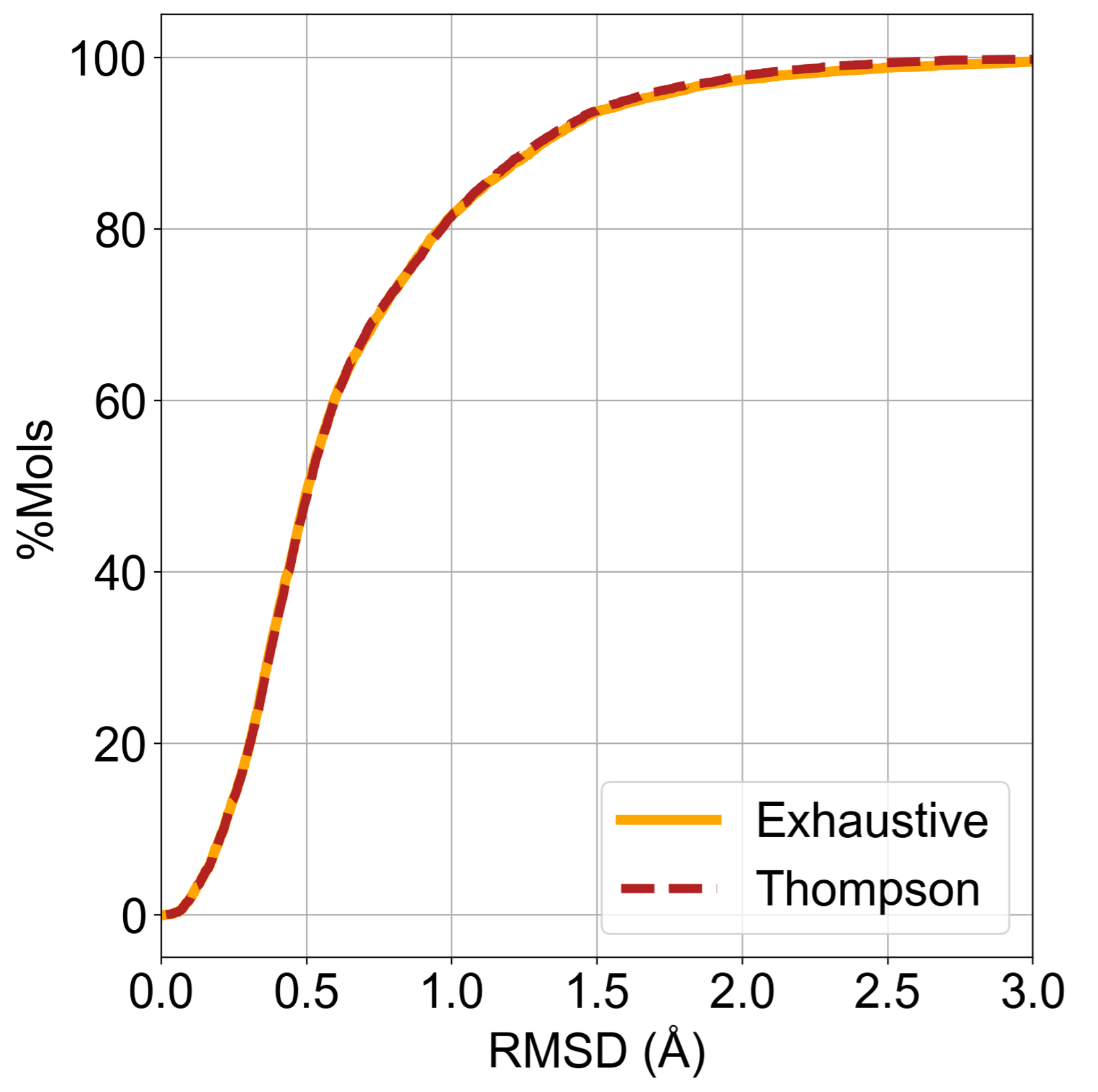
This performance gain does not come at the cost of quality. OMEGA with Bayesian sampling reproduces bioactive conformations with 80% of ligands within 1Å RMSD the experimental conformation across 6,000 PDB structures with HT (Highly Trustworthy) Iridium scores. Structure-based virtual screening performance is equivalent to that obtained from exhaustive sampling.