
Science-Centered AI at OpenEye
At OpenEye we believe that AI tools work best when built upon a foundation of carefully curated molecular data and relevant and interpretable molecular representations .
As a science-first company, our preference is always for the transparent over the opaque. We believe that an effective model is an interpretable model, and that the most valuable models are those that assist users in developing their own intuitions and insights, thereby enhancing human intelligence rather than replacing it.

Molecular Representation and AI
Moving beyond commonly used 2D descriptors to a more physically relevant 3D molecular description.
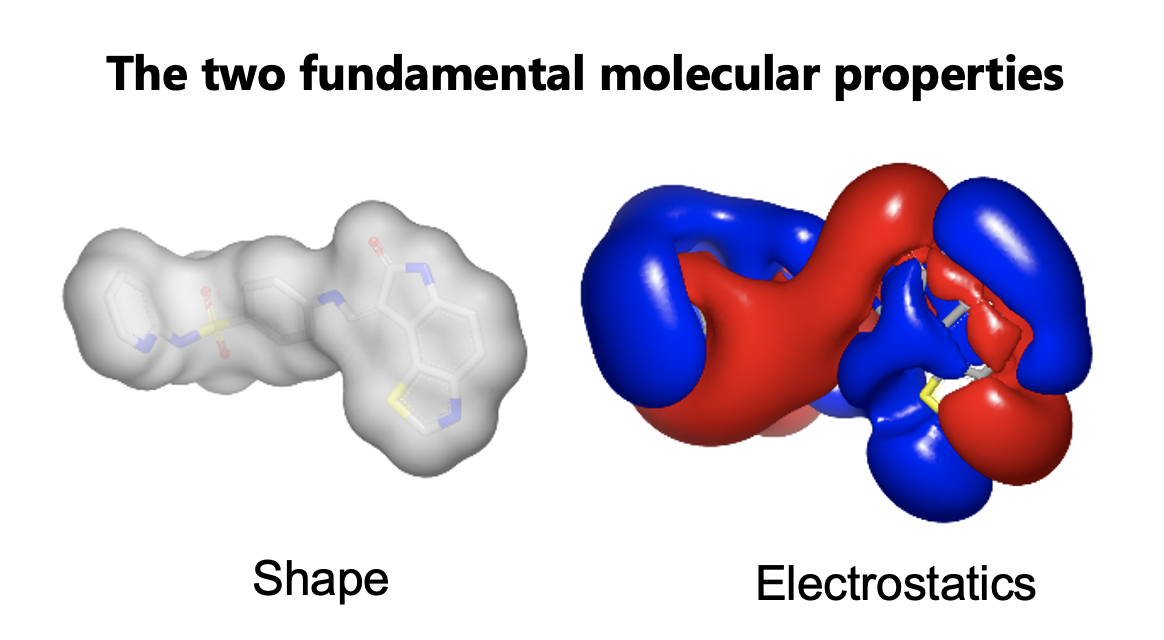
2D molecular graphs are a common and convenient method for representing molecules to AI. This approach, while convenient, ignores 3D information that is potentially critical for reliable and interpretable prediction. With our core physics-based representations, shape and electrostatics, we can provide AI with a more complete and relevant foundation for model building .
Learn About Shape
AI-Guided Trillion Scale Search with ROCS X™
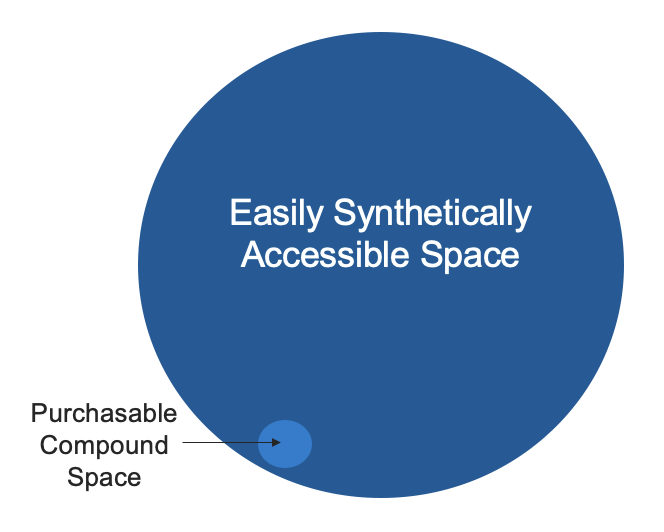
By combining shape and electrostatic similarity with Bayesian sampling, OpenEye extends virtual screening beyond conventional vendor catalogs into ultra-large, reaction-aware synthon spaces. ROCS X leverages our industry-standard FastROCSTM 3D search engine alongside AI-guided search to efficiently explore trillions of molecules. By evaluating as little as 0.0002% of an unenumerated library, ROCS X reliably recovers over 95% of top-scoring, synthetically accessible hits, dramatically reducing computational cost while delivering novel chemical matter for challenging drug discovery targets.
Learn about ROCS X
Interpretable AI for Potency Prediction with 3D-QSAR
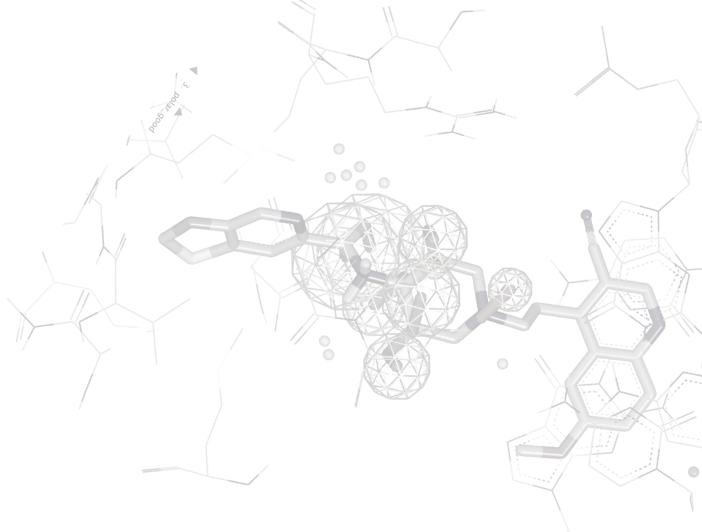
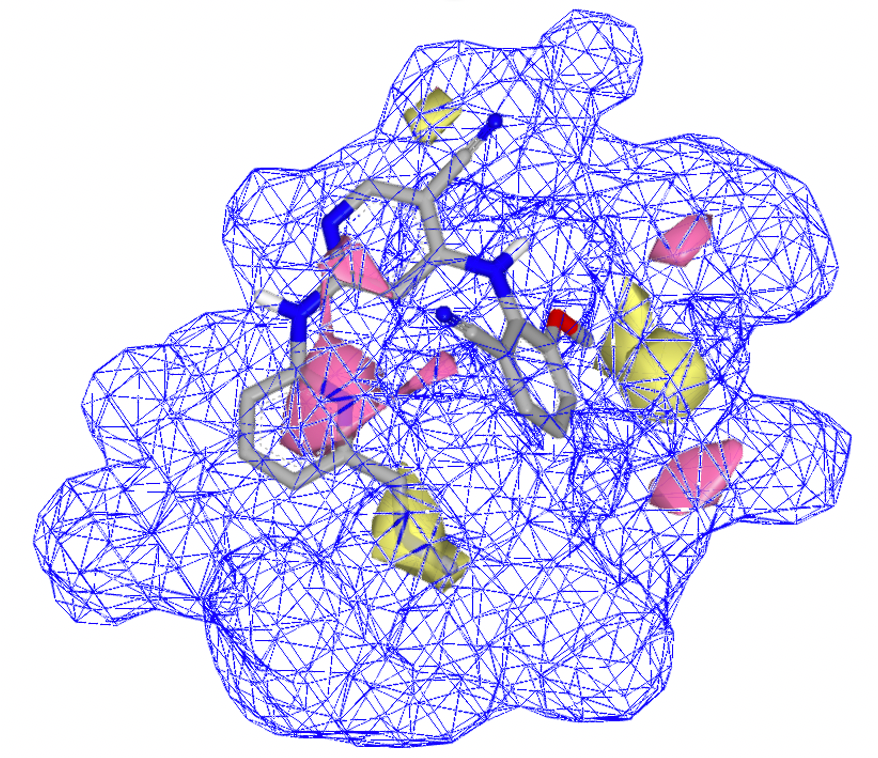
Building on physics-based shape and electrostatics, OpenEye's 3D-QSAR predicts binding affinity from descriptors derived from 3D conformers, combining ROCS® and EON similarity with machine learning models like kPLS and Gaussian Process Regression. Rather than acting as a black box, 3D-QSAR highlights favorable regions in the active site for specific functional groups, turning model predictions into actionable insight for lead optimization. Predictions come as a consensus across multiple models, giving scientists both accuracy and interpretability they can build on.
Learn about 3D-QSAR
OMEGA with AI: Speed without Compromise
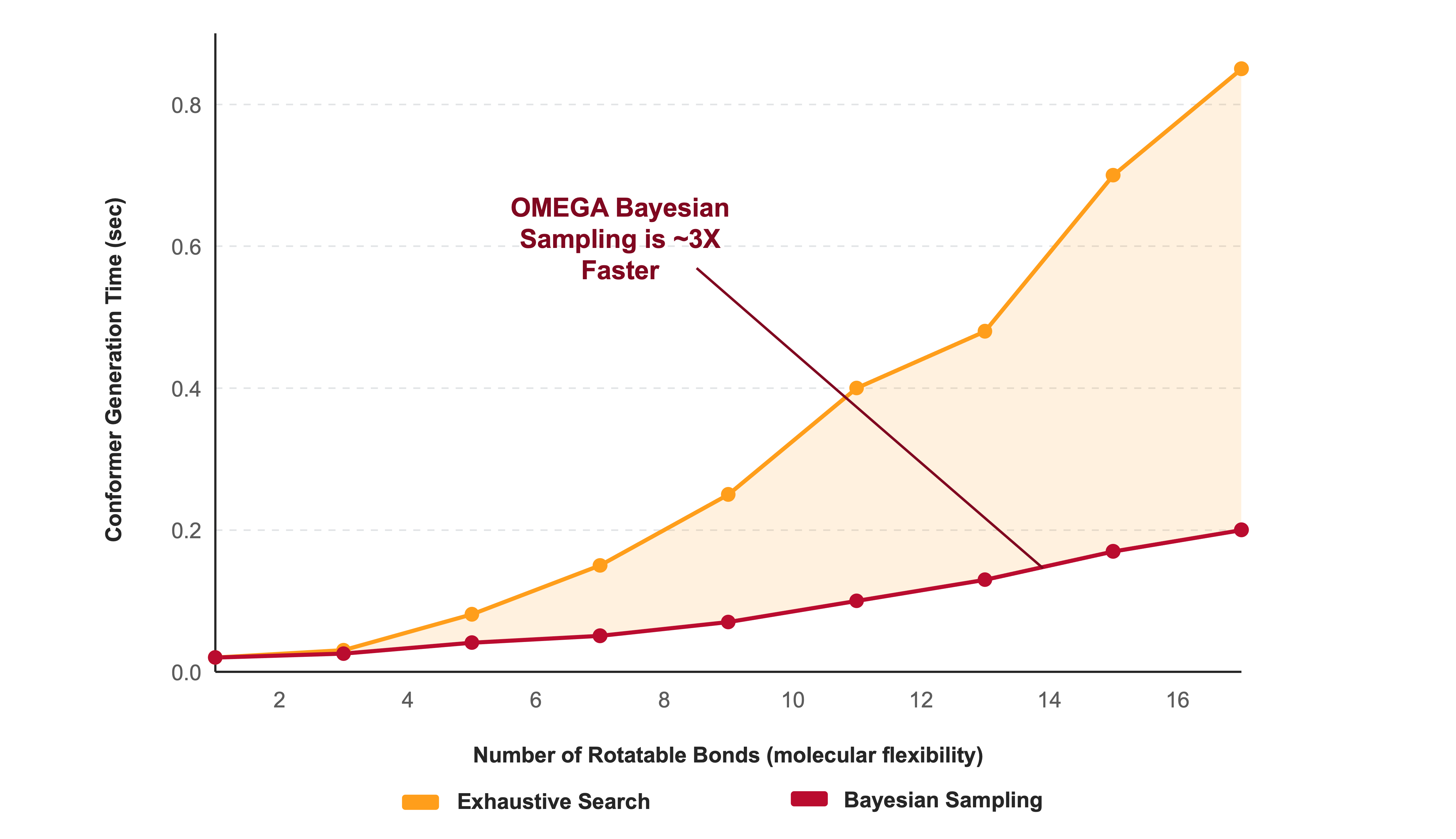
As the industry standard for 3D conformer generation, OMEGA now incorporates active learning to dramatically reduce compute times without sacrificing accuracy. By enhancing its torsion driving algorithm with a Bayesian sampling, OMEGA dynamically learns the conformational energy landscape to focus sampling on low-energy, bioactive structures. This intelligent search delivers a 2–3X speedup over traditional exhaustive enumeration, reproducing bioactive conformations within 1 Å RMSD across 80% of benchmark crystal structures. The result is rapid, cost-effective generation of high-quality 3D molecular ensembles for all your modeling applications.
Learn about OMEGA
AI-Driven Structure-Based Design
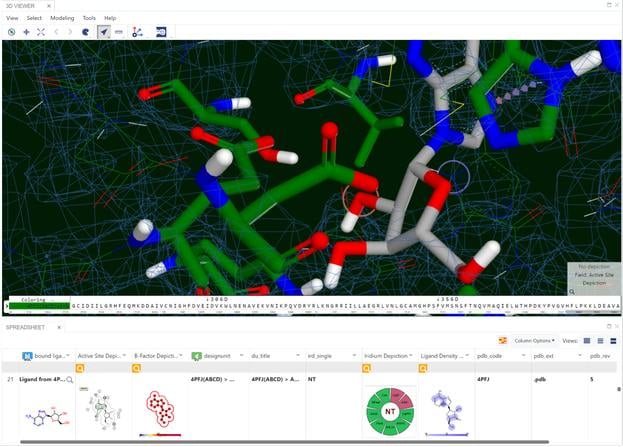
By harnessing the power of machine learning, we have accelerated large-scale structure-based virtual screening by up to tenfold. This innovation paves the way for rapid and efficient exploration of multi-billion molecule databases, significantly enhancing the efficiency and speed of drug development. Unlock new opportunities, discover novel therapeutic candidates, and bring life-saving treatments to patients faster than ever before.
Learn about Gigadock™ Warp
AI to Predict Molecular Properties
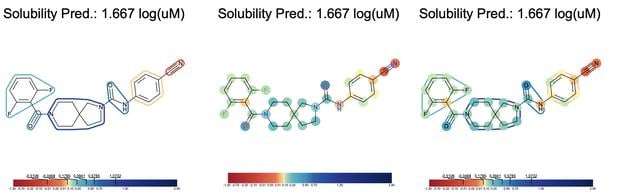
Currently, validated AI-driven methods for rapidly calculating 2D molecular descriptors to predict key molecular properties, such as solubility and toxicity, are already integrated into our Orion® molecular design platform.
In addition to pre-built models, Orion empowers users to develop and validate their own customized models to predict properties of relevance to them.
Learn about Model Building