

Target X: Pocket Detection and Ligandability Assessment Model
The identification and exploitation of binding sites in protein structures often represents a pivotal step in designing effective therapeutics. Sites that are rarely or never observed in experimental structures, yet remain druggable, are referred to as cryptic pockets. These pockets offer novel opportunities for modulating the activity of a target protein and are particularly valuable in crafting isoform-selective ligands when the structure of the substrate-binding site remains consistent across different variants of the target protein.
Through the use of state-of-the-art enhanced sampling molecular dynamics simulations, OpenEye's Target X pocket detection tools and ligandability assessment model empower users to thoroughly explore a protein's conformational space, potentially revealing one or more cryptic pockets. Customized visual and quantitative analysis of the results can yield valuable insights into the presence and potential druggability of these pockets.
Contact us to learn how you can gain new therapeutic opportunities using OpenEye's Target X.
Uncover hidden features in protein structures
Transitioning from static structures to dynamic insights is a critical aspect of computational chemistry.
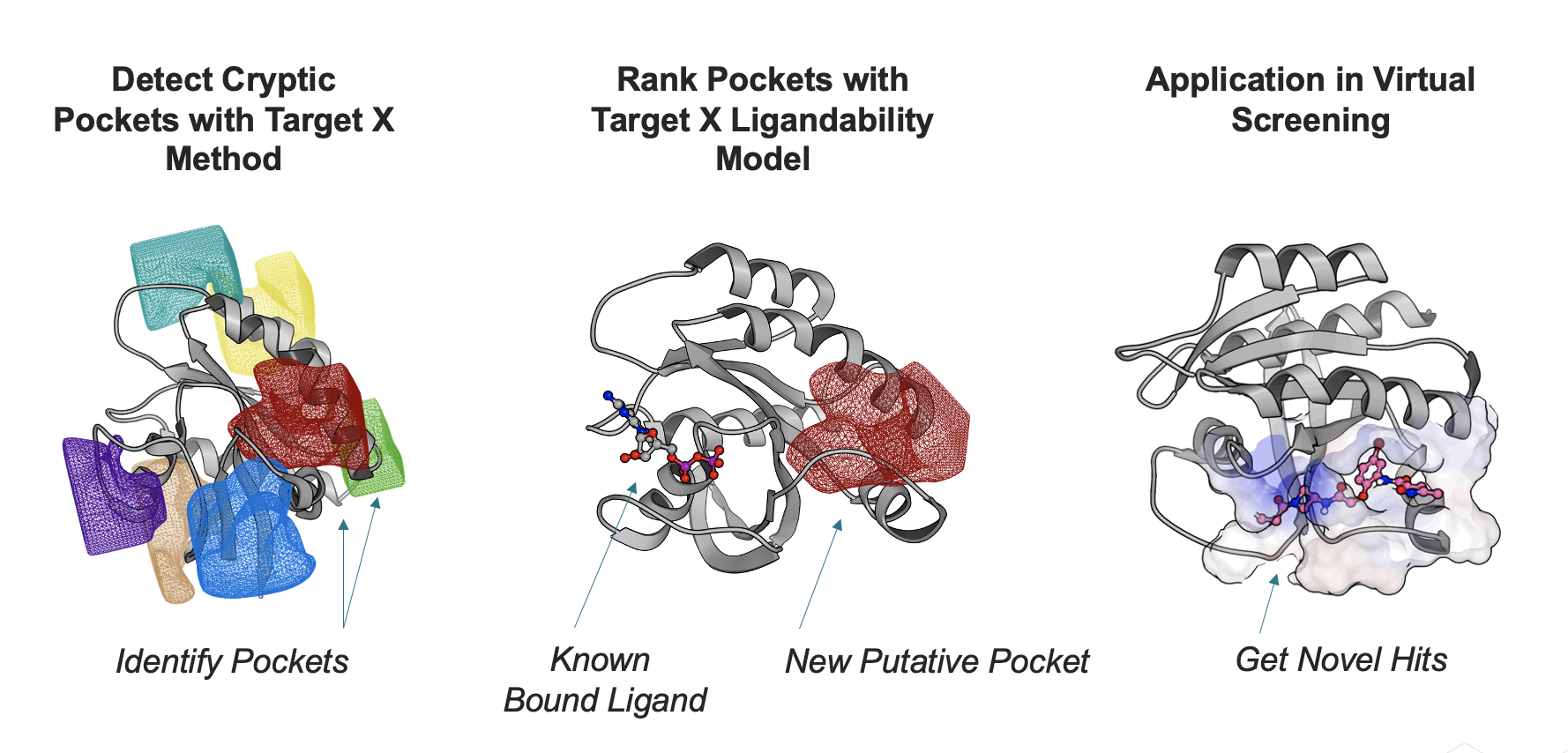
OpenEye provides users with automated workflows to explore hidden putative ligand binding sites for challenging protein targets.
With Target X, users can:
- Prepare and execute Weighted Ensemble Molecular Dynamics (WE-MD) simulations in a single or mixed solvent.
- Conduct pocket detection analysis to identify potential cryptic pocket sites.
- Rank pockets identified from molecular dynamics simulations, or directly on static protein structures using the ligandability model.
With OpenEye's Target X on the Orion® Molecular Design Platform, scientists can run calculations across hundreds or even thousands of GPUs in the cloud, saving valuable discovery time.
Empowering Structural Biology
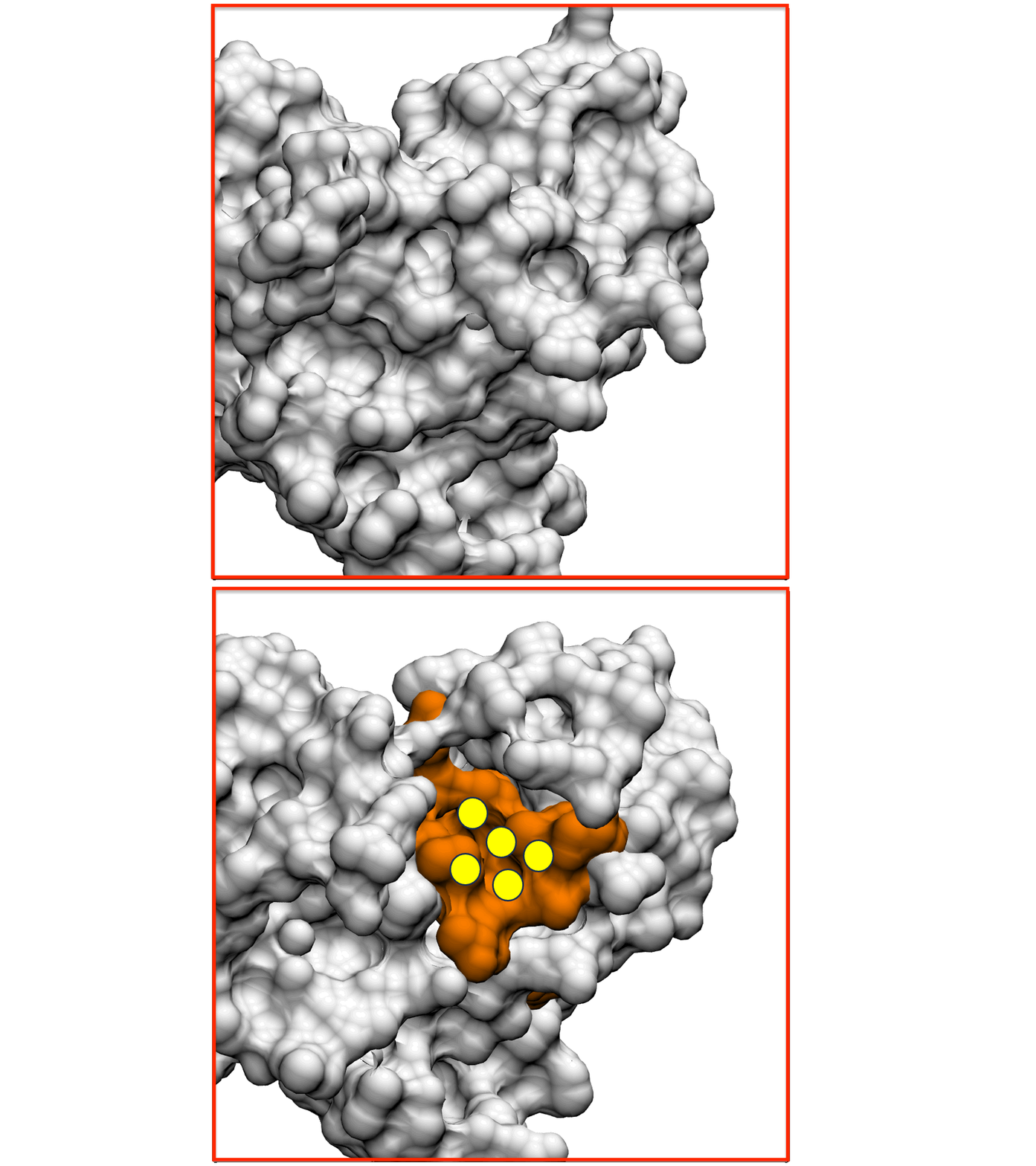
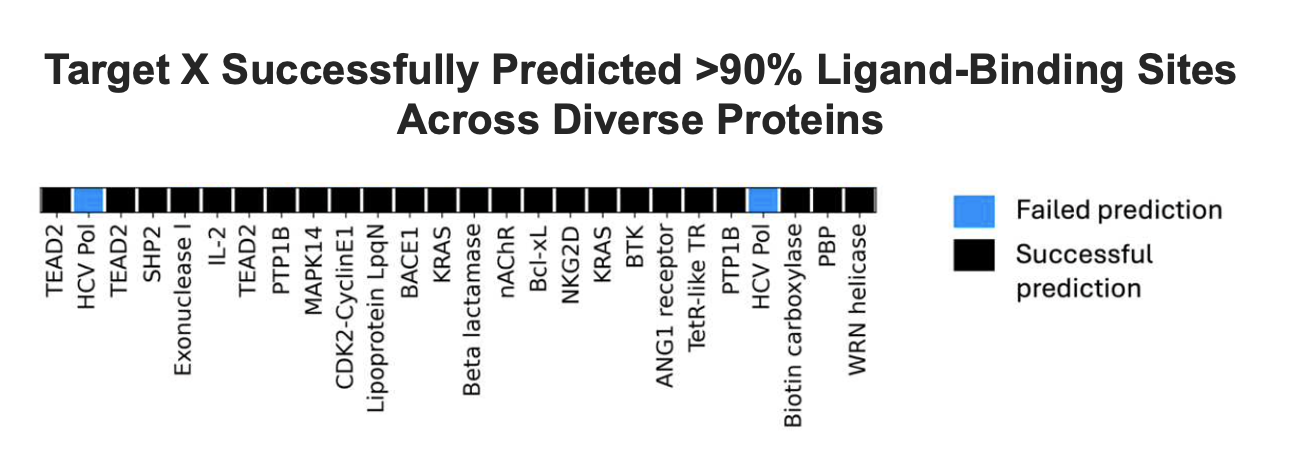
How do dynamics impact drug efficacy and resistance? Target X helps structural biologists look beyond static protein structures by revealing transient or hidden binding pockets that may not appear in apo or holo crystal structures. By simulating natural protein motions and ranking newly found sites based on predicted ligandability, Target X provides a systematic way to evaluate potential allosteric sites, design protein variants to stabilize relevant conformations, and plan follow-up experiments such as mutagenesis or fragment screening. With Target X, you can effectively translate your structural findings into therapeutic strategies.
Start Your Drug Discovery Campaign with an Advantage
Why run Target X on all your drug discovery targets? Target X unlocks the full conformational landscape of your protein, allowing you to start your drug discovery campaign with deeper structural insight. This can open parallel discovery paths and reduce reliance on a single binding-site strategy.
Target X provides an early, molecular-level view of how your protein truly behaves using a rigorous, physics-based approach. By combining enhanced conformational sampling with a reliable ligandability prediction model, it reveals transient and cryptic pockets that static structures often miss. Target X enables structural biology and chemistry teams to prioritize strategies with deeper insight before committing experimental resources.
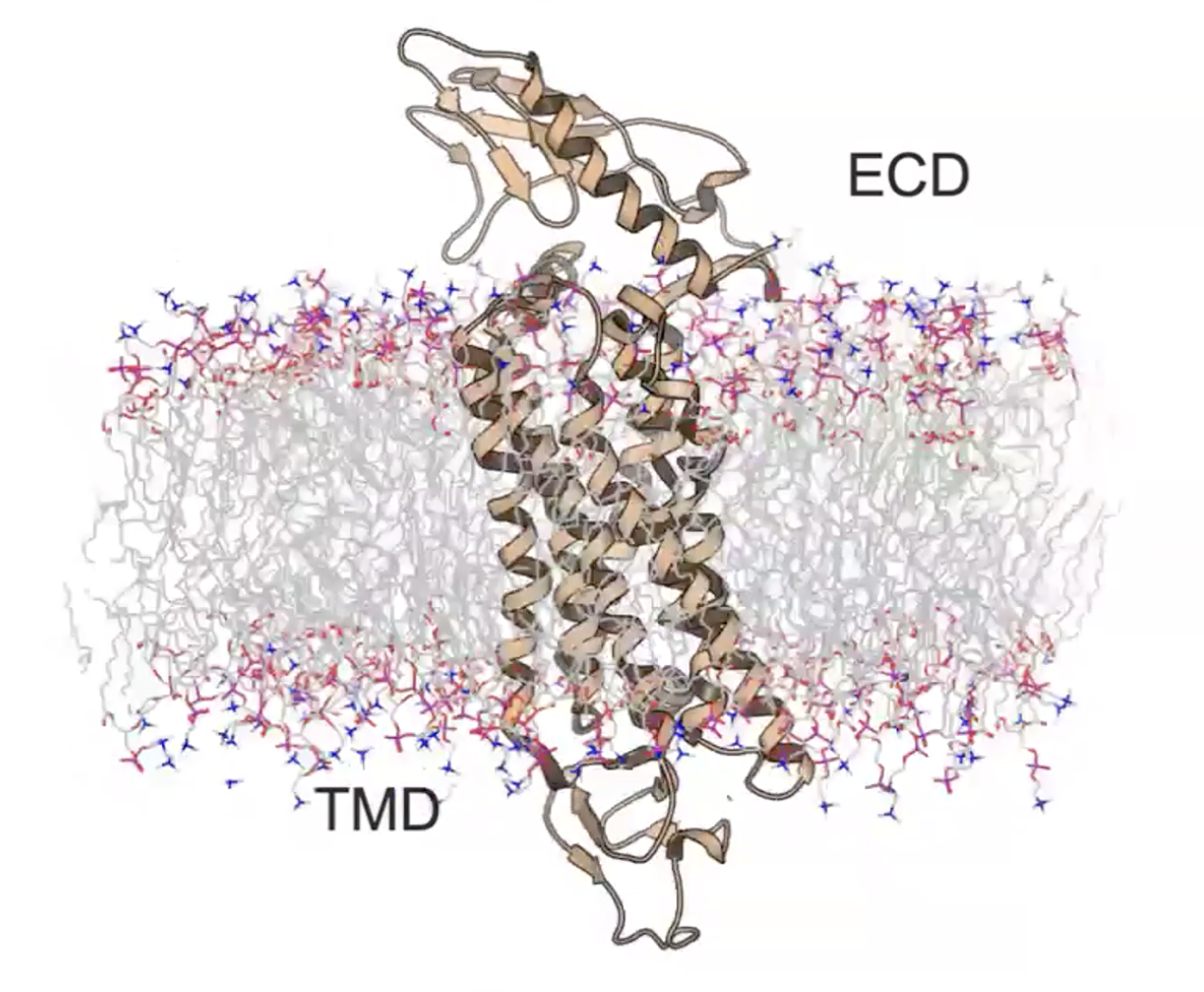
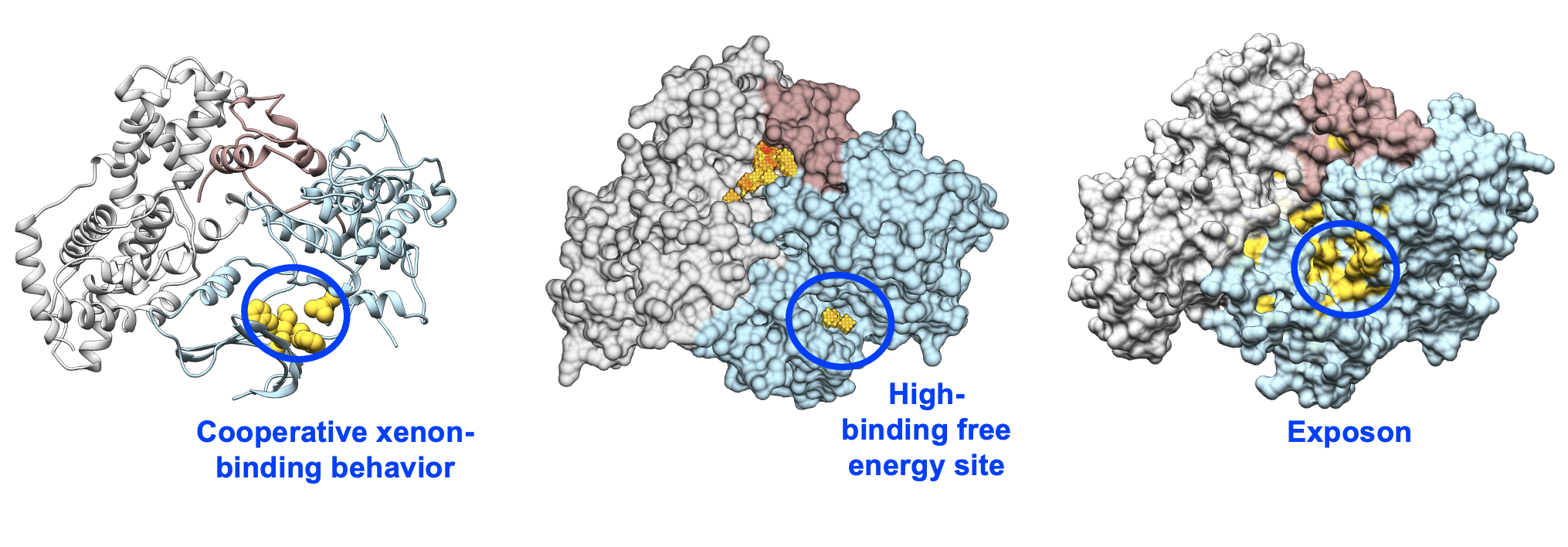
Discover new therapeutic opportunities
OpenEye’s Target X enables scientists to detect cryptic pockets, uncover alternative binding sites not apparent from a protein’s primary function or known active sites, and reliably rank pockets using ligandability model. Identifying such hidden pockets can open new therapeutic opportunities and support the design of novel drugs.