

Induced-Fit Posing
Predicting how diverse ligands bind is a notorious challenge when the receptor’s binding site shifts conformation. Because these subtle structural adjustments can drastically alter binding affinity, standard docking methods often fall short.
OpenEye's Induced-Fit Posing (IFP), commonly referred to as Induced-Fit Docking, was developed in collaboration with an industry partner and solves this by precisely modeling ligand binding configurations that impact receptor side-chain residues.
Why Choose OpenEye IFP?
-
Superior Accuracy: Significantly outperforms standard docking, achieving a >20% improvement in successful pose prediction rates.
-
Clearer Insights: Gain deep visibility into complex binding modes where target sites are highly flexible.
- Streamlined Workflows: Accelerate your hit-to-lead phase and make confident decisions during lead optimization.
Improve your pose prediction accuracy
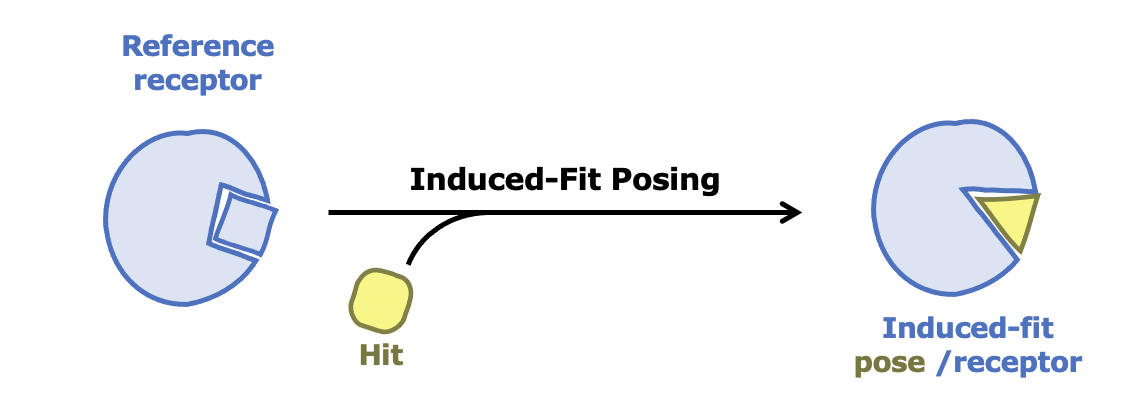
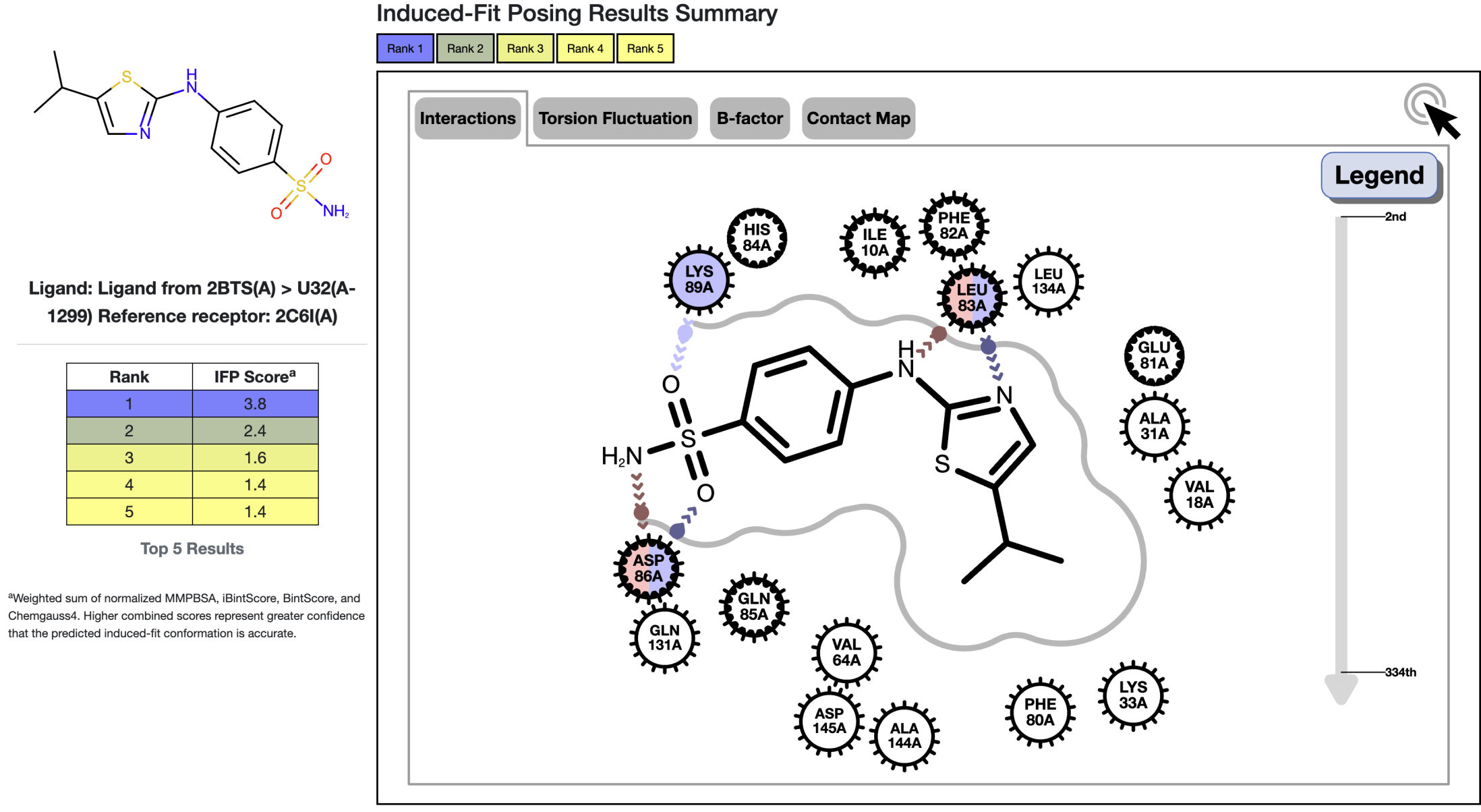
Developed with an industry partner, OpenEye's IFP uses short-trajectory molecular dynamics simulations post-docking to better model protein flexibility during induced-fit.
Accurate prediction of binding modes is essential in structure-based drug design. While high accuracy is relatively easy to achieve in lead optimization, where molecules are similar to known crystallographic ligands, hit-to-lead often involves examining diverse chemotypes dissimilar to known binding modes, which can reduce pose prediction reliability. OpenEye's IFP tackles this challenge by optimizing leads from diverse compounds. It enhances permissive docking through short molecular dynamics simulations to capture induced protein reorganization.
Download the OpenEye Science Brief on Accurate Binding Pose Prediction with Induced-Fit posing (IFP)
Why use OpenEye's Induced-Fit Posing?
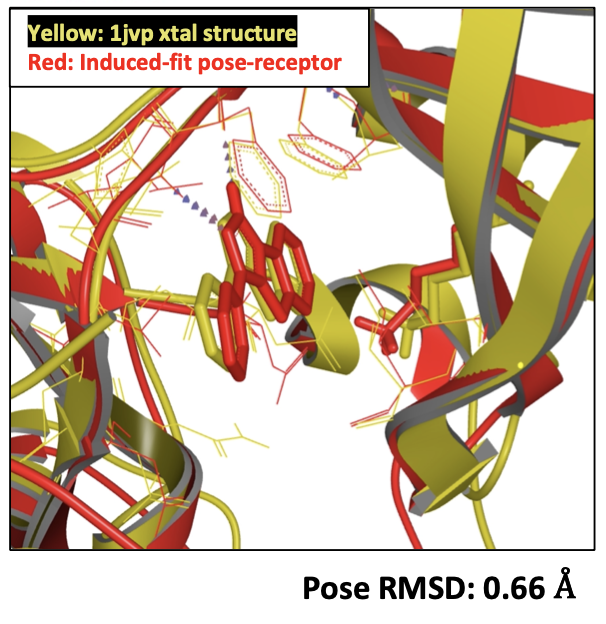
In a retrospective cross-docking studies across diverse protein targets, OpenEye's IFP yielded over 20% improved accuracy compared to standard docking approaches.
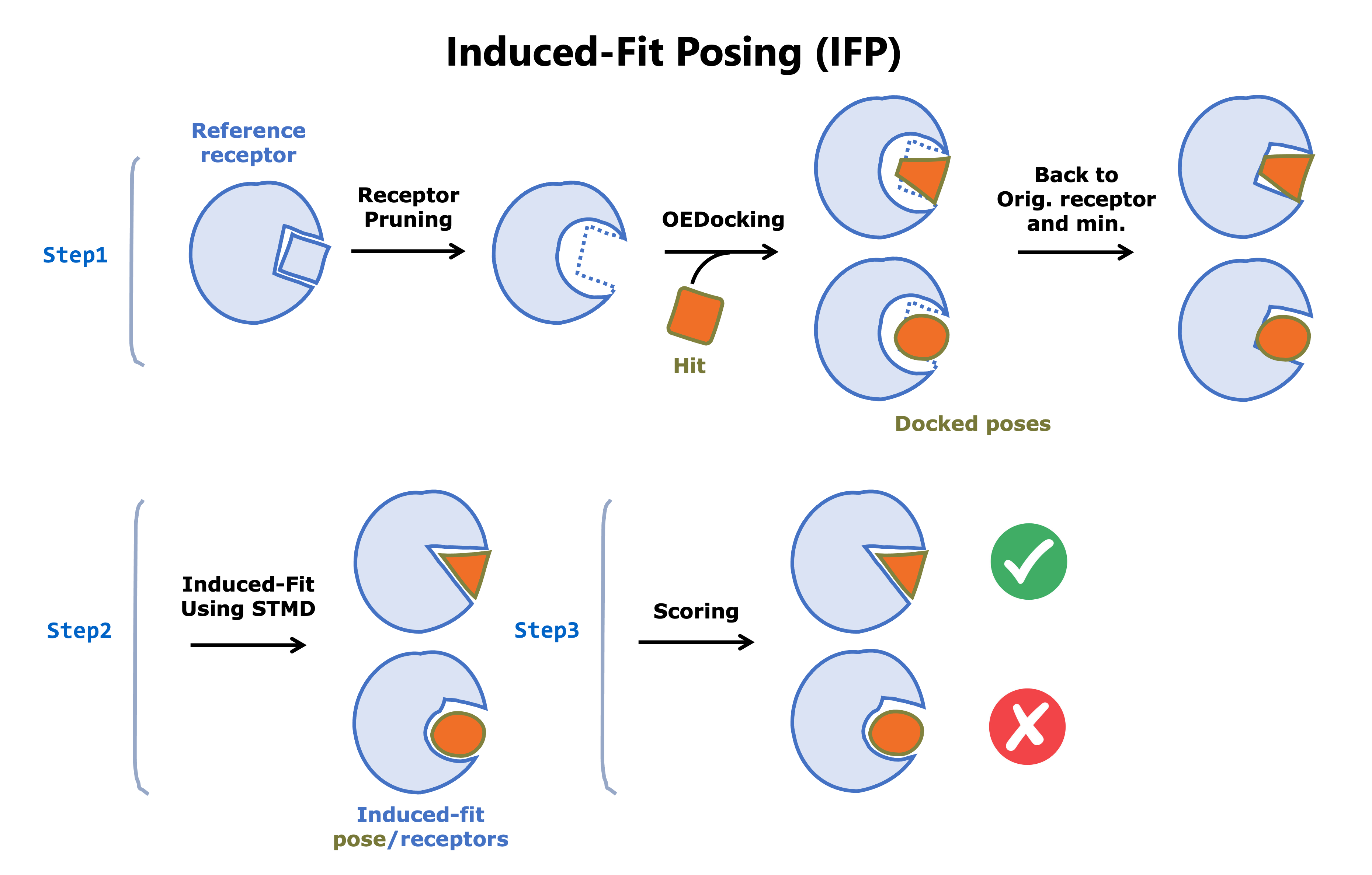
The automated 3-step IFP protocol provides an off-the-shelf solution for scientists. In the initial step, binding site residues are pruned to create more space for docked molecules. Binding hypotheses are then generated in both pruned and unpruned receptors using standard docking protocols to maximize pose reliability. High-scoring poses from docking undergo a short trajectory MD simulation (STMD), which allows for side chain adjustments and ligand repositioning. Clustering trajectories from STMD yields representative, low-energy poses with associated binding site conformations. These conformations are then scored using a consensus method that integrates MM-PBSA, docking scores, and knowledge-based protein-ligand interaction assessments.
FAQs