


Zap TK
Zap TK produces Poisson-Boltzmann electrostatic potentials [1] and, from them, biologically interesting properties including solvent transfer energies, binding energies, pKa shifts, solvent forces, electrostatic descriptors, surface potentials and effective dielectric constants. Zap TK works well for small molecules, proteins and macromolecular ensembles [2]. Unique to Zap TK is a dielectric function based on atom-centered Gaussians [3], which avoids the pitfalls of discrete dielectric constants.
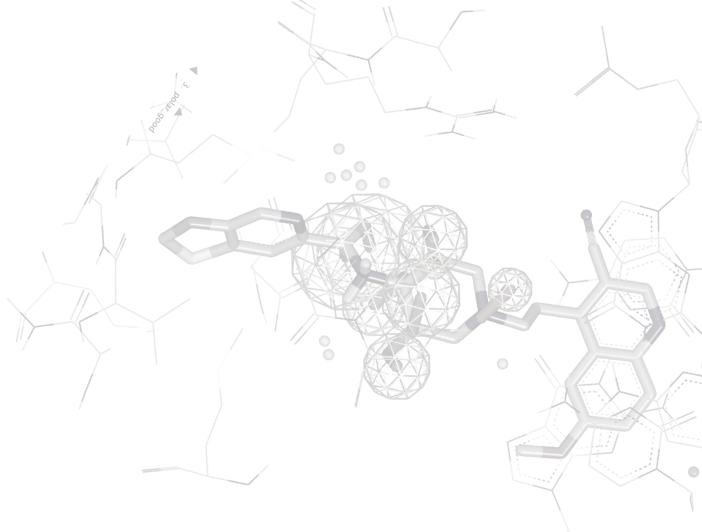
In a study of LCK kinase inhibitors, Zap TK was used to analyze the ligands solvent-exposed portions, simultaneously optimizing the solubility and binding affinity. In another study, Zap TK was used for high-throughput MM-PBSA calculations of relative binding free energies [4].
For more detailed information on Zap TK, check out the link below:
Documentation.jpg?width=623&height=381&name=OE_toolkits_2022_updated_w_SiteHopper%20v2-1%20(1).jpg)